

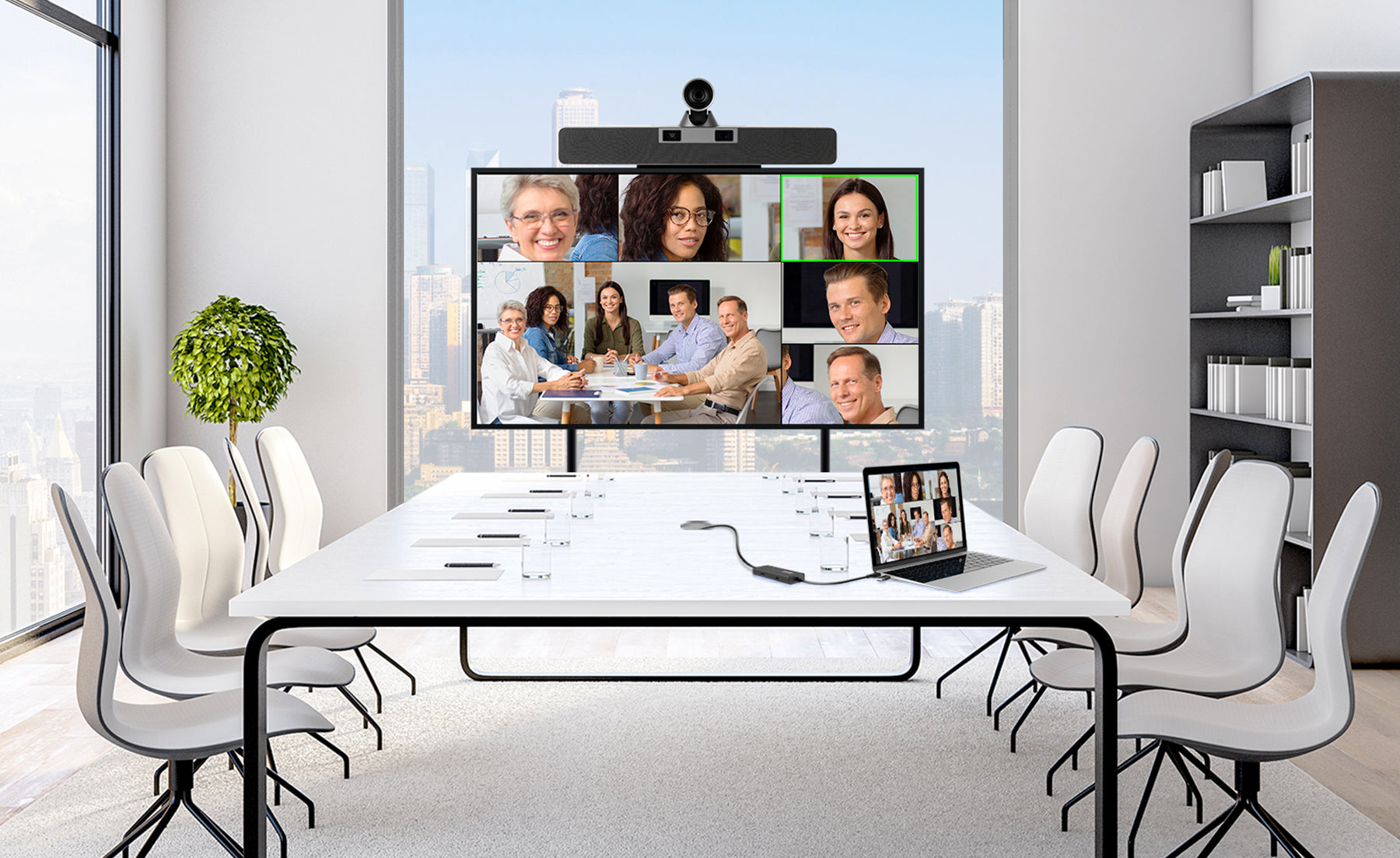
Not long ago, meeting rooms were built around dedicated systems, fixed workflows, and standardized hardware. Employees were expected to adapt to the room.
Today, the expectation has flipped.
Employees want to walk into a meeting room, connect their own device, and start collaborating immediately—regardless of whether they use Microsoft Teams, Zoom, Google Meet, Webex, or another platform.
This shift has fueled the rapid adoption of Bring Your Own Device (BYOD) meeting room solutions.
For organizations looking to simplify collaboration, reduce IT complexity, and support hybrid work, BYOD is quickly becoming the new standard.
Here's why.
What Is a BYOD Meeting Room?
A BYOD meeting room allows users to bring their own laptop or device and connect directly to the room's audio and video equipment.
Instead of relying on a dedicated room computer, users can launch meetings from their preferred platform while leveraging the room's:
-
Camera
-
Microphones
-
Speakers
-
Displays
The result is a familiar experience for users and a simplified management model for IT teams.
1. Employees Want Flexibility
The modern workplace is rarely standardized around a single collaboration platform.
Organizations frequently support:
-
Microsoft Teams
-
Zoom
-
Google Meet
-
Cisco Webex
-
Customer or partner platforms
In many cases, employees participate in meetings across multiple platforms throughout the week.
The challenge
Dedicated room systems can create friction when users need to join meetings hosted on different platforms.
The BYOD advantage
Users can launch meetings from their own device using the platform they already know.
No switching systems.
No learning new workflows.
No compatibility concerns.
BYOD gives employees the flexibility they expect while maintaining a professional meeting room experience.
2. Simplicity Improves Adoption
One of the biggest reasons meeting room technology fails is complexity.
When users aren't confident about:
-
Connecting devices
-
Launching meetings
-
Sharing content
they often avoid using the room's capabilities altogether.
The challenge
Complex meeting room workflows lead to delays, frustration, and increased support requests.
The BYOD advantage
A simple connection process—often as easy as plugging in a single cable—helps eliminate friction.
Users spend less time troubleshooting and more time collaborating.
The easier the technology is to use, the more likely employees are to embrace it.
3. IT Teams Need Manageable Solutions
As organizations expand hybrid work environments, IT teams are often asked to support more meeting rooms without additional resources.
Managing dedicated room systems across multiple spaces can create challenges related to:
-
Updates
-
Maintenance
-
User support
-
Platform compatibility
The challenge
More complexity typically means more support tickets.
The BYOD advantage
BYOD environments simplify room infrastructure while giving users control over their meeting experience.
This often translates into:
-
Easier deployment
-
Reduced management overhead
-
Lower support demands
-
Faster troubleshooting
For many IT teams, simplicity is becoming just as important as functionality.
4. Hybrid Work Requires Greater Flexibility
Hybrid work has fundamentally changed how organizations collaborate.
Employees may be:
-
In the office one day
-
Remote the next
-
Meeting with customers on different platforms
-
Collaborating across multiple locations
Meeting rooms must be flexible enough to accommodate these changing workflows.
The challenge
Rigid room designs struggle to adapt to evolving workplace needs.
The BYOD advantage
BYOD allows meeting rooms to support a wider range of use cases without requiring major infrastructure changes.
Organizations gain flexibility without sacrificing collaboration quality.
5. Future-Proofing Collaboration Investments
Technology continues to evolve.
New collaboration platforms emerge. Workplace expectations shift. Hybrid work models adapt.
Organizations want solutions that remain relevant over time.
The challenge
Building meeting rooms around a single platform or workflow can limit future flexibility.
The BYOD advantage
BYOD strategies provide a platform-agnostic approach that can adapt as business needs change.
This flexibility helps protect technology investments while reducing the risk of future compatibility challenges.
What Makes a Great BYOD Meeting Room?
Not all BYOD environments are created equal.
Successful deployments typically focus on:
Simple Connectivity
Users should be able to connect quickly and confidently.
High-Quality Audio
Clear communication remains the foundation of effective meetings.
Professional Video
Remote participants should feel equally included in the conversation.
Cross-Platform Compatibility
The room should work seamlessly regardless of the conferencing platform being used.
Consistent User Experiences
Employees should have the same experience from room to room.
The goal is simple: make collaboration effortless.
Closing Thoughts
The rise of BYOD isn't just about convenience—it's a reflection of how modern workplaces operate.
Employees expect flexibility. IT teams need simplicity. Organizations want scalable solutions that support hybrid work without adding unnecessary complexity.
BYOD helps bridge these needs by creating meeting spaces that are easier to use, easier to manage, and more adaptable to the future.
At Rocware, we're seeing growing demand for collaboration solutions that embrace this flexibility while delivering the audio, video, and reliability organizations need to support productive hybrid meetings.
As workplace technology continues to evolve, one thing is becoming increasingly clear: employees don't want to adapt to the meeting room—the meeting room should adapt to them.
Share:
The 5 Signs Your Meeting Rooms Are Ready for an Upgrade
Why Great Audio Matters More Than Great Video in Hybrid Meetings